Image - 2026-07-29 19:41
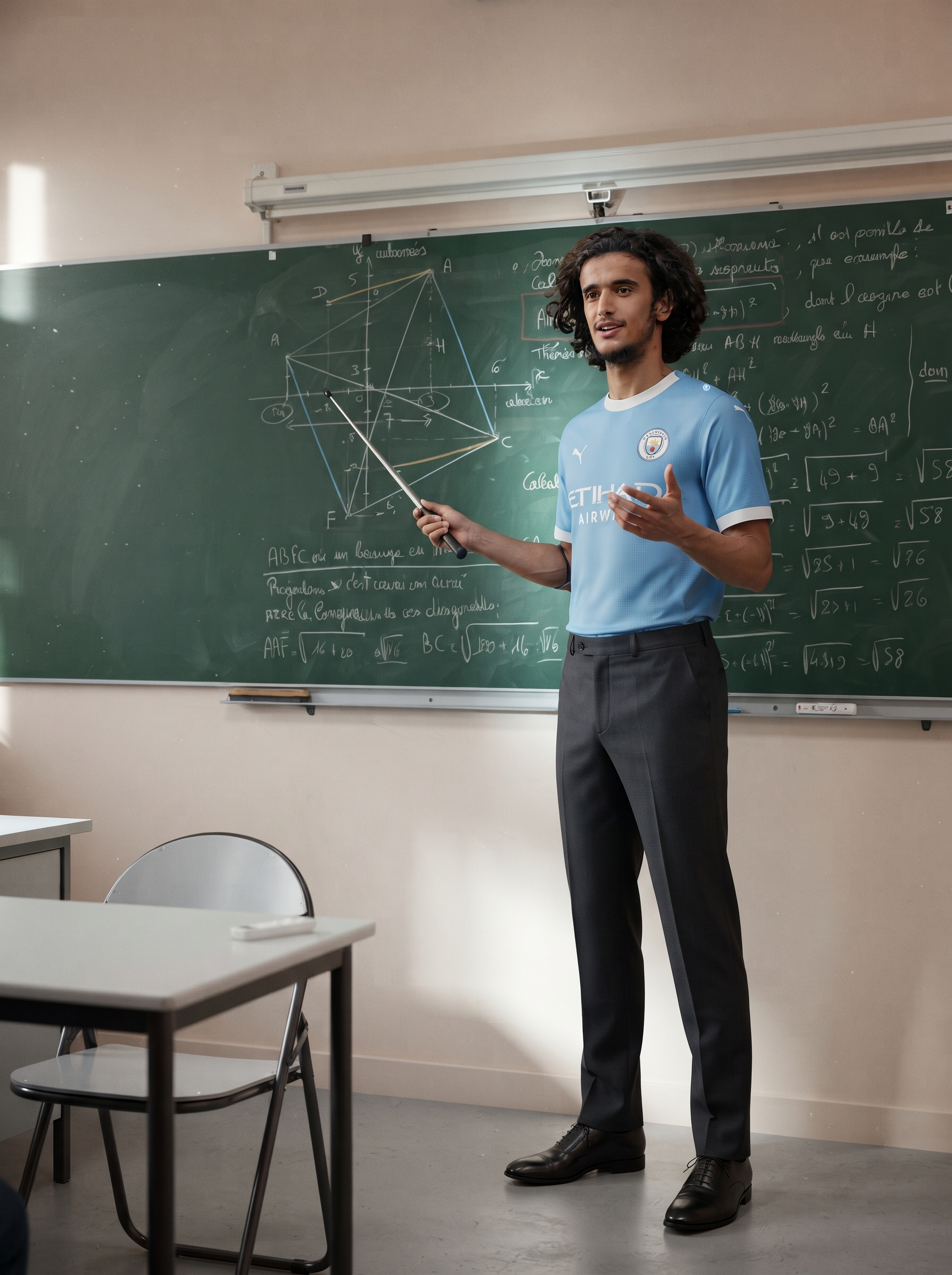
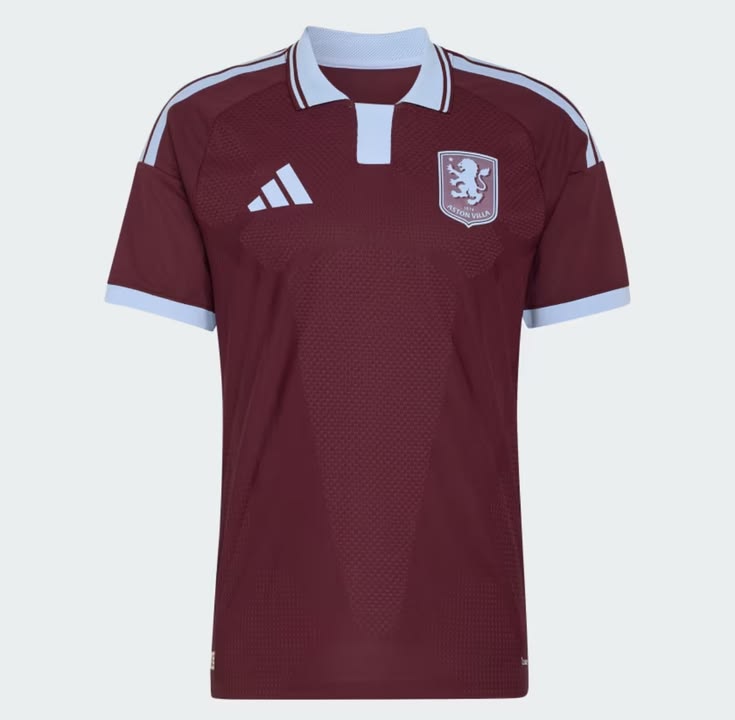
Photorealistic classroom scene featuring the man from reference [2], standing at the chalkboard location from reference [1]. He wears a fitted football jersey inspired by reference [3] (sky‑blue body with white collar and sleeve cuffs, subtle gradient, breathable micro‑mesh performance knit, fine weave and perforations, thin seam taping, heat‑pressed logos lying flush) paired with tailored classic wool trousers in a deep neutral tone (charcoal or black), crisp center crease, fine twill texture, discrete waistband and belt loops, clean hem breaking lightly over polished black leather dress shoes. He is turned slightly three‑quarters toward the class (about 20–30°), torso angled to the students while maintaining clear visibility of the board. Pose and action: the subject holds a long classroom pointer in his board‑side hand—telescopic stainless steel shaft with a matte finish and a small black rubber tip; the pointer’s tip clearly touches or hovers within millimeters of a specific geometry line on the chalkboard. His other hand gestures mid‑air toward the students: palm open with relaxed, naturally spread fingers and a soft curl at the knuckles, showing mild tendon definition and believable finger alignment. Expression engaged and mid‑explanation, mouth slightly open as if speaking, brows subtly animated; gaze directed to the class rather than to camera. Posture upright yet relaxed; shoulders neutral; subtle weight shift onto the leg closer to the board. Environment from [1], described with fidelity: a large green chalkboard fills most of the wall, framed in white aluminum rails; the lower tray holds short sticks of white chalk, a used felt eraser with dusty edges, and a small plastic remote. The chalkboard surface shows realistic wear: faint ghosting from past equations, eraser swirls, matte and glossy patches, tiny nicks, and a light dust bloom along the tray. Current content on the board includes hand‑written French geometry notes and calculations in slightly varied stroke weights, a multi‑segment polygon and coordinate axes, arrows, underlines, and boxed formulas such as a distance formula and Pythagorean relations (square roots and exponents rendered legibly, not mirrored). A ceiling‑mounted white projector with visible lens housing and cable loop hangs above; a thin fluorescent or LED ceiling strip casts soft ambient fill. The front desk in the foreground is pale and slightly glossy; a folded metal student chair sits behind it, catching soft reflections. Subtle chalk dust motes float in the air, visible in light streaks. Walls are a warm off‑white with minor scuffs at elbow height; a narrow shadow gap runs along the chalkboard frame. Floor out of frame or softly suggested; a few front‑row desktops blur at the bottom edge to imply class presence. Lighting: naturalistic, mixed classroom lighting. Primary soft ambient from ceiling fixtures, neutral‑white; a secondary directional source from the projector area creates a gentle hotspot and a soft‑edged specular bloom on the chalkboard. Add mild window daylight from camera‑left to create dimensional modeling on the subject’s face and jersey, with soft shadows falling toward camera‑right. Maintain balanced exposure: readable chalk lines without blown highlights; gentle falloff across the board; subtle rim highlight on the subject’s board‑side shoulder from the chalkboard bounce. Skin and hair (preserve the identity and facial structure from [2] without alteration): ultra‑realistic, natural skin microtexture with clearly defined pores on forehead, nose, and cheeks; faint vellus hair along the cheeks and jawline; gentle nasolabial folds and delicate under‑eye texture; light shaving shadow along the jaw and upper lip; tiny, natural asymmetries, micro bumps, and occasional moles; mild capillary color variation around nostrils and inner eye corners; realistic subsurface scattering at ears and thinner skin edges under rim light. A natural, balanced micro‑sheen on the T‑zone from indoor light (not oily) with more matte cheeks and temples. Eyebrows rendered hair‑by‑hair with slight irregularity; moist eye speculars showing small dual catchlights (room + board reflection). Hair matches [2]: full, medium‑long curls with slight frizz and a few flyaways catching the light; soft volume around the temples and crown; neatly groomed facial hair. Clothing realism: - Jersey: micro‑mesh shows perforation pattern and knit structure; soft, controlled specular response of synthetic performance fabric; hems sit flat on the shoulders and sleeve ends with mild fabric tension over the deltoids; subtle bunching at the waist where the jersey meets the trousers; heat‑pressed details remain flush with only micro‑cracking at tight bends; no moiré. - Trousers: fine twill grain visible on close inspection; precise seam placement and stitch density; pocket mouths lie flat; natural stress lines at the zipper placket and gentle diagonal folds at the hips due to the stance; subtle break at the shoe. - Shoes: polished black leather Oxfords with thin leather soles, shallow creases across the vamp, tidy waxed laces, and soft, controlled reflections from classroom lights. Pointer and hand interaction: the pointer’s rubber tip compresses slightly if touching the board; the subject’s fingers wrap the shaft with realistic pressure, knuckle whitening barely visible; wrist angle anatomically correct; the gesturing hand shows natural tendon lines, soft skin folds at the MCP joints, and slight motion implication without blur. Optics and composition: semi‑wide, natural perspective suitable for a classroom—roughly a 35–50 mm full‑frame lens look from student eye level. Compose with the subject placed just off center near the board, pointer forming a clean leading line to the diagram; head near the upper third; the foreground desk and chair subtly anchor the lower frame. Moderate aperture around f/3.5–f/5.6 to keep the subject and the chalkboard content crisp while letting the distant wall and ceiling fixtures soften slightly. High dynamic range with filmic roll‑off; true‑to‑life color balance (neutral whites, rich green chalkboard, accurate sky‑blue jersey); very fine, natural film grain; zero artificial oversharpening or haloing. edit this photo so the skin looks naturally real and photographic - not plastic, not airbrushed. add subtle real-lite skin detail: Visible skin pores and fine wrinkles. Fine micro-texture, slight unevenness, tiny natural impertections, light freckles or beauty marks where it fits, soft peach fuzz, realistic specular highlights and a natural oil sheen on the t-zone, gentle under-eye texture and real lip texture. keep the same identity and facial structure preserve the shape of eyes, nose and lips, the makeup, the hairstyle, the lighting and the color grading. do not beautity or reshape teatures, do not add heavy makeup. keep it photorealistic, like a raw unretouched photo. Authenticity details: tiny chalk dust on the board rail and a few specks on the pointer tip; slight unevenness in handwriting thickness; soft contact shadow where the subject’s torso nears the board; small scuffs on the desk edge; projector ventilation grille and status LED faintly visible; no distracting logos beyond those inherent to the jersey. Negative prompt: overly smooth plastic skin, beauty‑filter look, waxy faces, incorrect hand anatomy, extra or fused fingers, floating pointer tip, mirrored or illegible chalk text, warped board lines, blown highlights on the board hotspot, moiré on fabrics, banding, crunchy HDR halos, over‑saturated blues or greens, CGI‑looking edges, heavy motion blur, tilted horizon, clipping through the board or desk, random added watermarks or text overlays. Suggested parameters (optional): - Aspect ratio 3:2 or 4:3 for a classroom feel - Guidance/CFG mid‑range to preserve realism - Low denoise/noise strength if conditioning on [1], [2], [3] to retain likeness and board content - High resolution; moderate contrast; neutral color grade with gentle warm skin bias

Free to start · Generate videos and images with AI in seconds
More by Nangelina
См. все →



More Google images
См. все →