Image - 2026-11-21 19:48
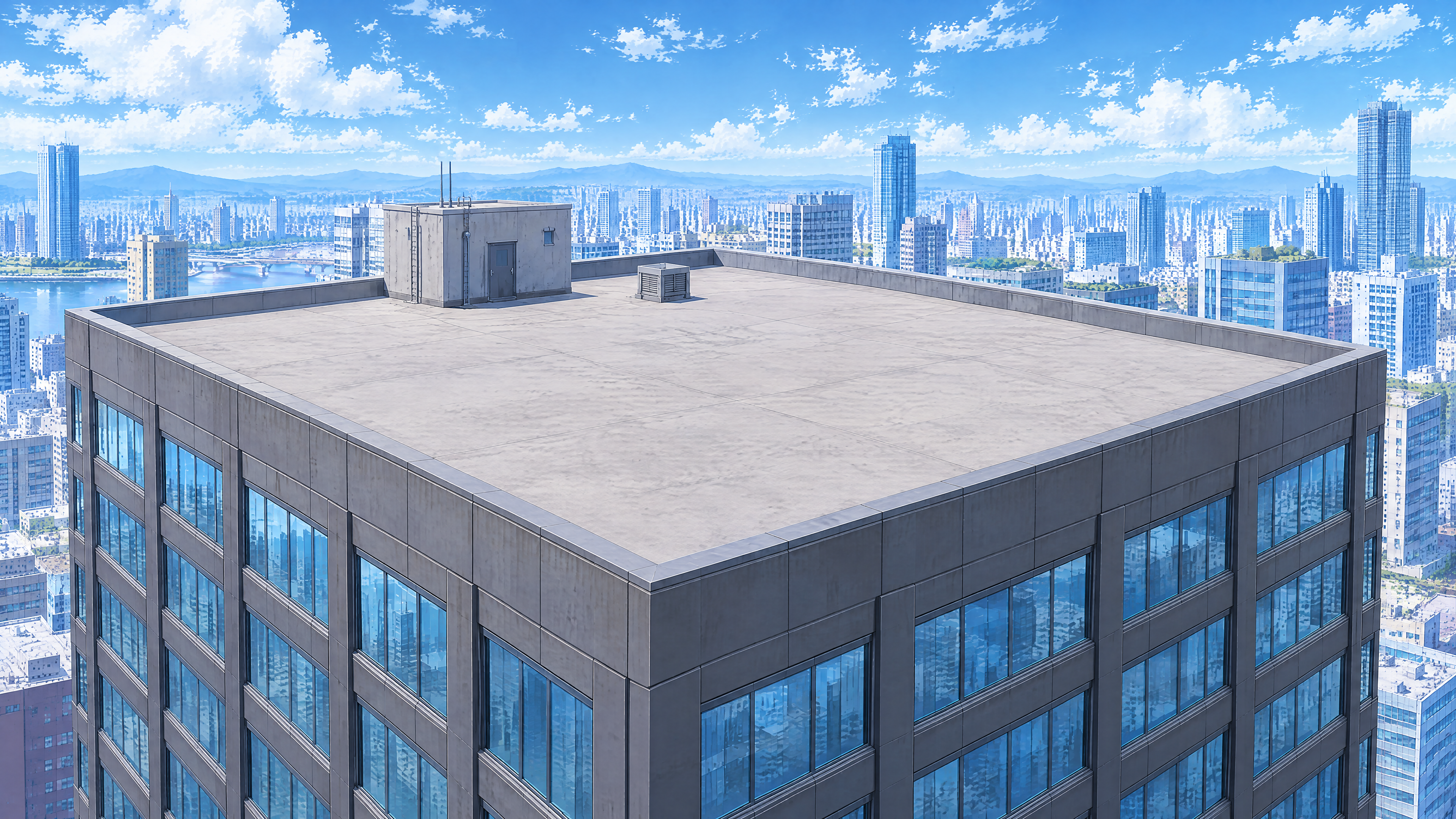
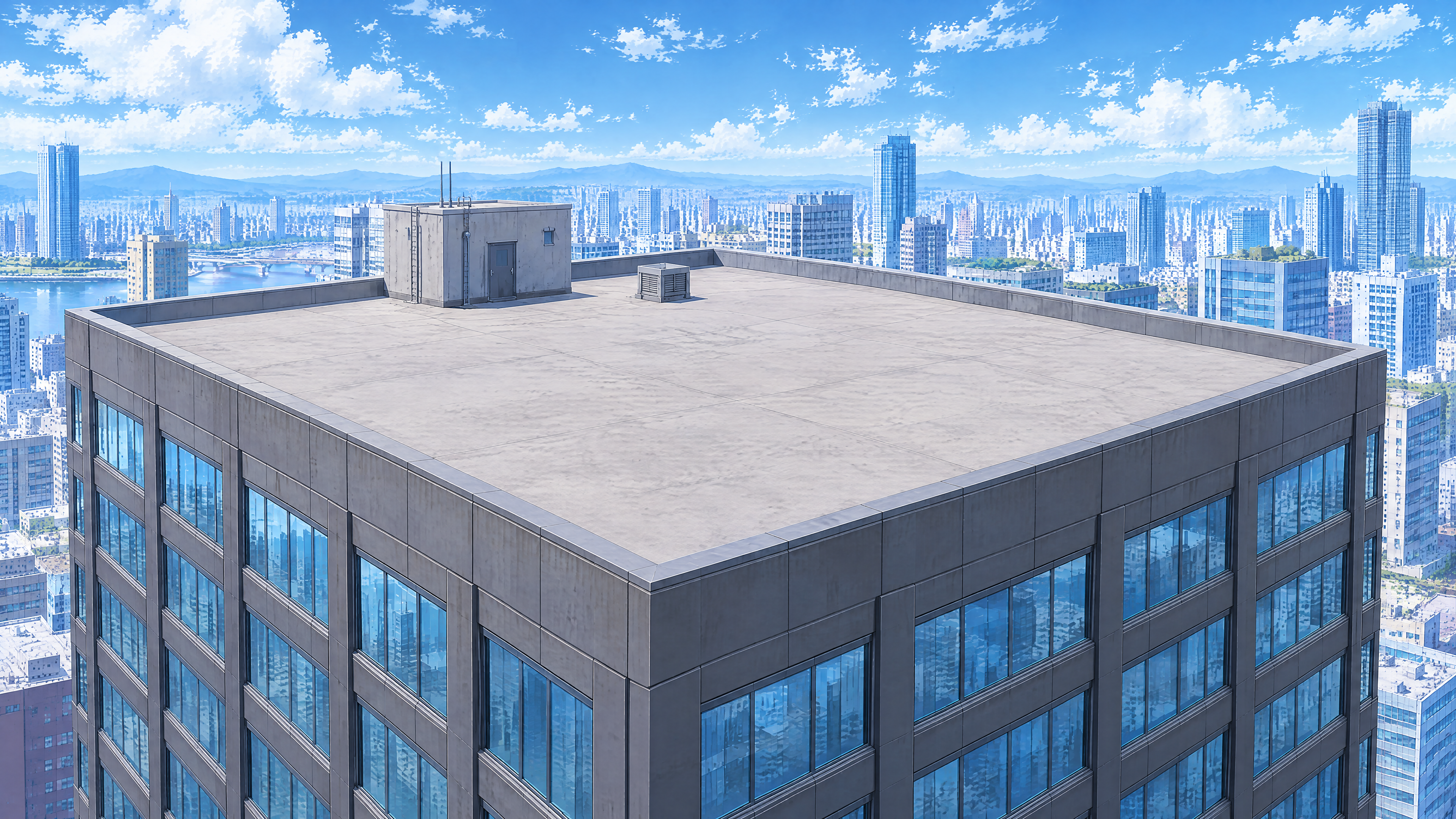
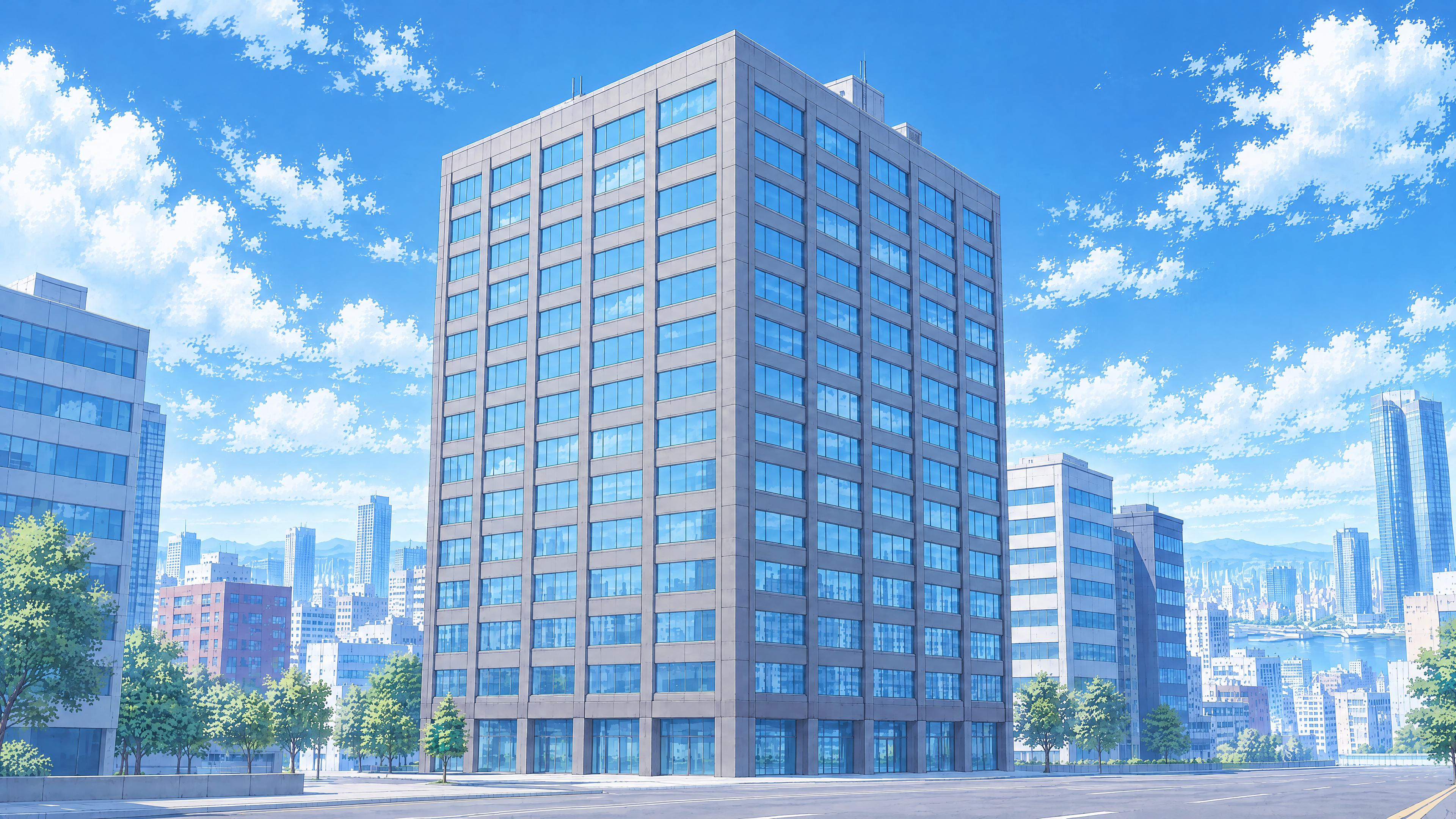
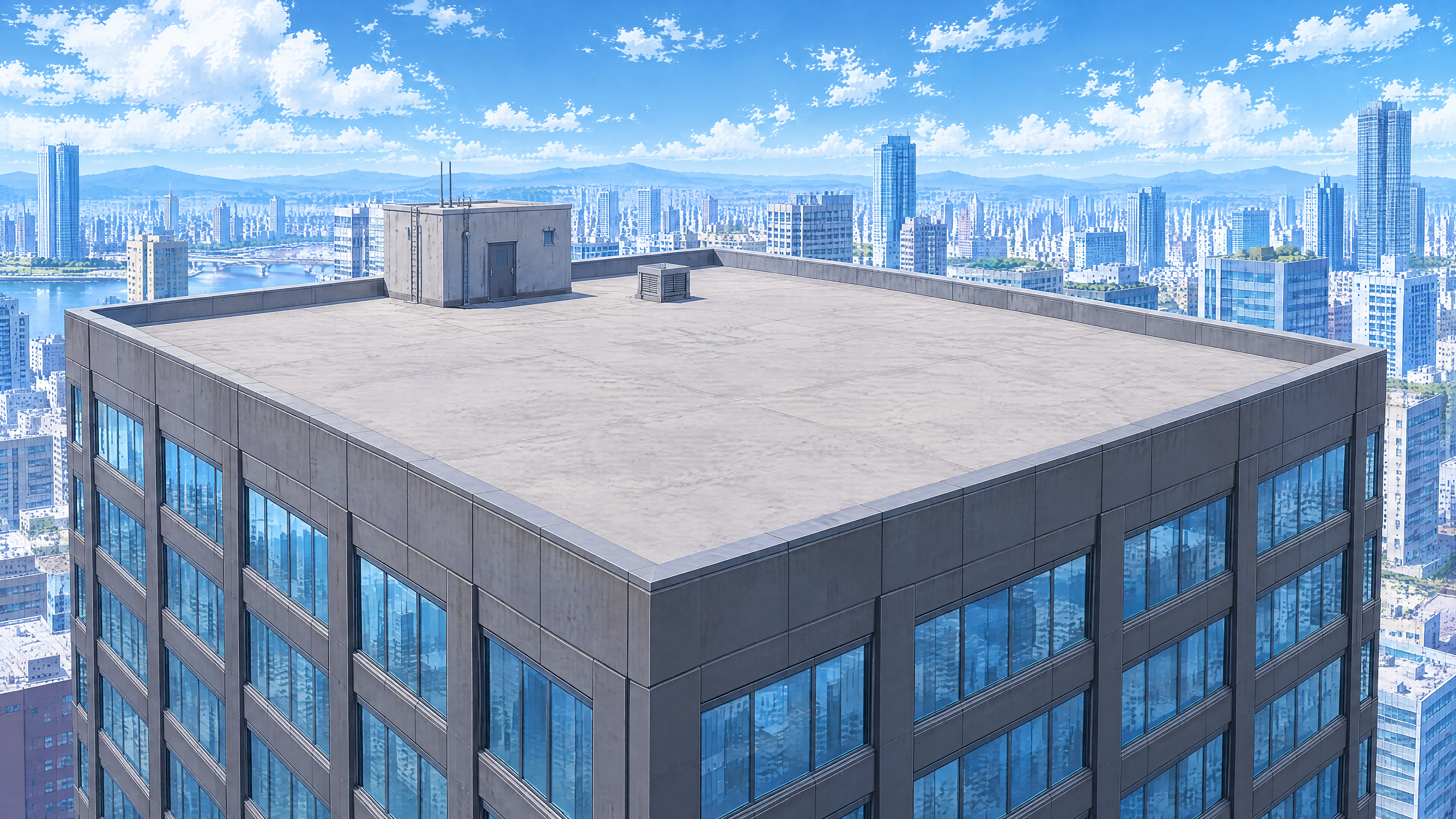
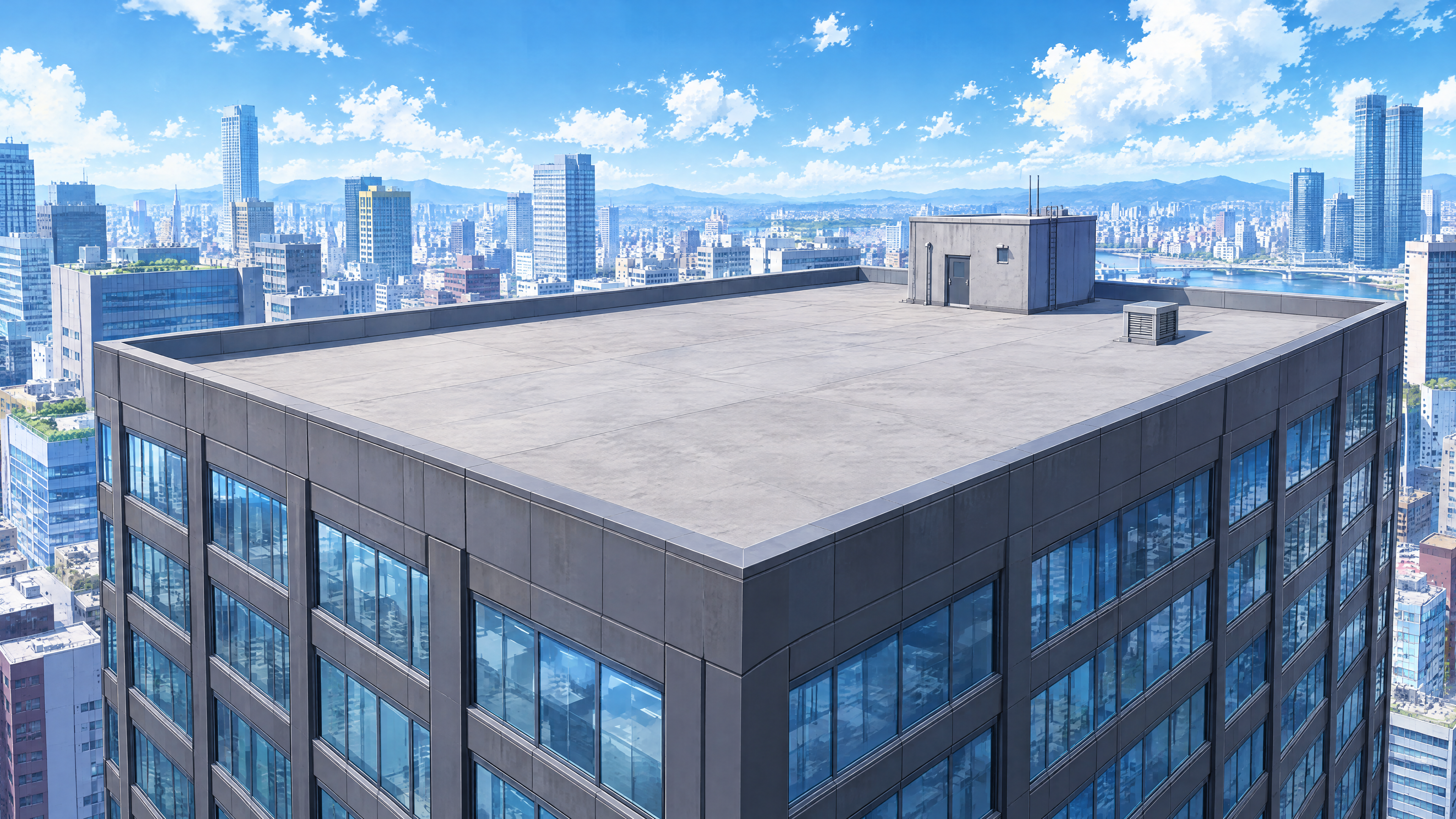
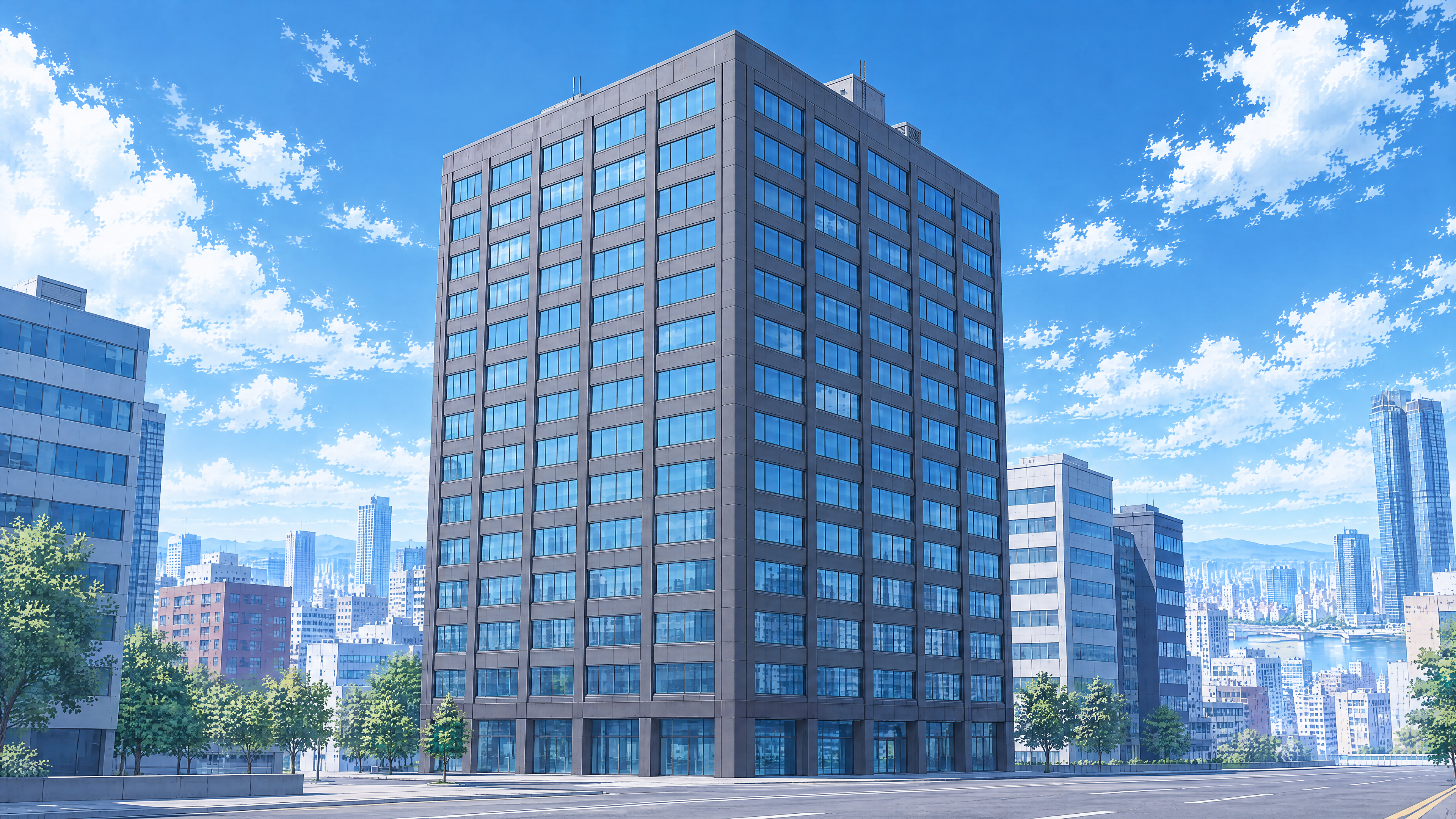
MAIN OBJECTIVE Create one highly detailed cinematic architectural reference image showing the EXACT SAME WH51 rooftop location from Референс 1, now viewed from a new three-quarter camera angle. This is a CAMERA-ANGLE VARIATION of an already approved environment. It is NOT a new rooftop design. Preserve the architecture, rooftop geometry, building facade, positions of permanent rooftop objects, surrounding city layout, daylight conditions, colors, and cinematic semi-realistic anime illustration style established in Референс 1. The goal is to create a second, spatially consistent environment master for the WH51 animated music video "Дотянуться до тебя". This new image must clearly depict the same physical rooftop and the same multi-story building as Референс 1. REFERENCE ASSIGNMENT Референс 1 — PRIMARY APPROVED ROOFTOP MASTER This image is the absolute authority for the environment. Preserve exactly: - The overall rooftop footprint and architectural proportions. - The rooftop floor material and color. - The existing floor seams and surface texture. - The shape, height, thickness, and construction of all parapets. - The existing rooftop access structure, if visible. - The existing ventilation or technical structures. - The exact number of permanent rooftop objects. - Their physical dimensions and positions relative to the roof edges. - The original building facade materials. - The original window shapes and repeating facade pattern. - The surrounding buildings and their relative positions. - The original daytime lighting. - The original sky and weather conditions. - The established cinematic semi-realistic anime illustration style. Use the reference as a fixed architectural design. Do not reinterpret, simplify beyond recognition, or redesign the location. CAMERA CHANGE — THREE-QUARTER VIEW Move the virtual camera to a new three-quarter position around the SAME rooftop. Rotate the viewing direction approximately 35–45 degrees relative to the original camera angle. Use a natural architectural three-quarter perspective that reveals the depth of the rooftop and its relationship to the building below. The camera should remain at a moderately elevated viewpoint, looking diagonally across the rooftop. Keep a believable camera height and distance. The new view must reveal a different spatial relationship between the existing rooftop edges while preserving the original building geometry. This is a genuine change of camera position in three-dimensional space. Do not simply mirror, flip, rotate, stretch, or warp the original image. Do not rotate the building itself. Do not move architectural objects to make the composition more attractive. ROOFTOP GEOMETRY — STRICT CONTINUITY Preserve the exact original rooftop footprint. The lengths and proportions of the visible roof edges must remain spatially believable. Keep the original parapet design and the same arrangement of roof boundaries. Existing roof corners must retain their relative positions. If a permanent object is near a particular corner in Референс 1, it must remain near that SAME physical corner in the new view. Do not relocate objects to the opposite side of the rooftop. Do not add new architectural sections, extensions, terraces, balconies, or additional roof levels. Preserve the original open performance area. The main central portion of the rooftop must remain spacious and unobstructed. PERMANENT ROOFTOP OBJECTS Reproduce ONLY the permanent structures already present in Референс 1. For every visible rooftop object: - Preserve its original design. - Preserve its original approximate size. - Preserve its original material and color. - Preserve its original orientation. - Preserve its original location relative to nearby roof edges. - Show the same object from the new camera angle. Do not duplicate any structure. Do not invent new ventilation units, access cabins, pipes, antennas, railings, air-conditioning systems, or rooftop machinery. If an existing structure becomes partially hidden because of the new perspective, allow natural occlusion. Do not move it into view artificially. MINIMAL ENVIRONMENTAL CLUTTER The rooftop must remain visually simple and suitable for AI video animation. Keep the same limited number of technical objects established in Референс 1. Do not increase environmental complexity. Do not add: - Extra ventilation units. - Air-conditioning arrays. - Satellite dishes. - Antennas. - Water tanks. - Metal scaffolding. - Random pipes. - Rooftop furniture. - Advertising structures. - Decorative installations. - Stage platforms. - Concert lights. - Speaker towers. - Loose cables. - Random equipment. Preserve the original clean and open atmosphere. MAIN BUILDING — ARCHITECTURAL IDENTITY The rooftop belongs to the SAME modern multi-story city building shown in Референс 1. Preserve the original exterior architectural design. Maintain: - The same facade materials. - The same dominant colors. - The same building proportions. - The same window shape. - The same repeating window grid. - The same structural divisions between floors. - The same roof-to-facade connection. Do not invent an unrelated building beneath the rooftop. Where the new camera reveals an exterior wall that was previously hidden, extend the established architectural system logically and consistently. Do not introduce a new facade style. The building must remain recognizable as the approved WH51 performance building. FACADE AND WINDOW CONTINUITY The building will appear again in a major musical climax of the WH51 music video. At approximately 05:05:28, several glass windows on this SAME building will shatter on a powerful drum accent. Therefore, preserve a clear and repeatable window layout. Maintain: - Original rectangular window proportions. - Consistent window spacing. - Original frame colors. - Existing horizontal and vertical facade divisions. - Realistic glass appearance. - Believable alignment between floors. All windows are intact in this image. Do not show cracked glass, broken windows, flying debris, or damage. The purpose is to establish the undamaged architecture from another viewpoint. SURROUNDING CITY — SPATIAL CONSISTENCY Preserve the same modern urban environment as in Референс 1. The city should appear from a different viewing direction, not as a completely new skyline. Maintain the relative location of major recognizable neighboring buildings wherever they remain visible. Allow natural perspective changes and occlusion. Buildings visible from the new direction may appear only where geographically plausible. Keep a dense but believable modern metropolis. Do not invent major new landmarks or dramatically alter the urban density. Avoid extreme futuristic architecture, fantasy towers, and cyberpunk environments. TIME OF DAY — STRICT DAYTIME REQUIREMENT The scene takes place during the SAME bright daytime conditions as Референс 1. Preserve: - Clear natural daylight. - Bright blue sky. - Soft white clouds where consistent with the reference. - Natural sun illumination. - Realistic daytime shadows. - Bright, clean urban atmosphere. The lighting must feel continuous with the original rooftop reference. Do not change the time of day. STRICTLY AVOID: - Sunrise. - Sunset. - Golden hour. - Evening. - Blue hour. - Twilight. - Night. - Dark dramatic skies. - Neon-dominated lighting. WEATHER AND SURFACE CONDITIONS The weather is completely dry. The rooftop surface is dry matte concrete or the exact original material shown in Референс 1. Preserve the same surface color and texture. No rain. No puddles. No water streaks. No wet concrete. No wet asphalt. No reflective wet surfaces. No fog, storm clouds, snowfall, or visible precipitation. All lighting and ground reflections must remain consistent with dry daytime conditions. SIGNAGE AND TEXT — STRICT PROHIBITION Do not include Chinese characters. Do not include Japanese kanji or kana. Do not include Korean Hangul. Do not include other non-Latin writing systems. Do not include readable advertisements, signs, storefront text, billboards, or logos. Do not copy any text that may appear in Референс 1. Do not generate pseudo-text, random symbols, or decorative typography. Use architectural shapes, materials, colors, and urban density to communicate the environment. COMPOSITION Use a horizontal 16:9 cinematic composition. Frame the SAME rooftop from a three-quarter angle. The image must clearly show: - The main open performance area. - At least two rooftop perimeter edges. - The existing parapet construction. - The approved permanent rooftop structures. - Part of the original multi-story building facade below the roofline, if visible from the selected camera position. - The surrounding city skyline. - The bright daytime sky. The rooftop must remain the main subject. Keep enough visible floor space to understand where the WH51 band will later perform. Do not crop away important architectural landmarks. Do not use an excessively distant aerial view. Do not place the camera so low that the roof floor becomes invisible. Use realistic perspective without extreme wide-angle distortion. LIGHTING Use bright, natural daytime lighting matching Референс 1. Maintain consistent light direction, shadow softness, exposure, and color temperature. The new camera angle may reveal different illuminated and shaded surfaces, but the physical position of the sun remains unchanged. Do not introduce artificial stage lighting, colored spotlights, neon glow, or dramatic cinematic darkness. VISUAL STYLE Match the approved WH51 cinematic semi-realistic anime illustration style. Preserve: - Refined illustrated architectural detail. - Believable building geometry. - Natural daylight shading. - Clean city color palette. - Controlled environmental textures. - Soft atmospheric perspective. - Realistic architectural proportions. - Consistent materials and surfaces. The result must look like another camera shot from the SAME animated film environment. Do not transform the image into photorealistic architectural photography, glossy CGI, flat cartoon backgrounds, or a different anime style. ENVIRONMENT CONTINUITY AND ANIMATION READINESS This rooftop will be used repeatedly for band performance scenes. Therefore: - Maintain stable architectural geometry. - Maintain the same positions of permanent rooftop objects. - Preserve the original open central performance area. - Preserve consistent roof edge and parapet design. - Keep facade windows structurally coherent. - Avoid excessive detail that may deform during AI animation. - Create a spatially understandable three-quarter view. The resulting image must be useful as a complementary location reference alongside Референс 1. It should help generate future camera variations without requiring a new rooftop design. STRICT CONSTRAINTS - Show the EXACT SAME rooftop from Референс 1. - Change only the virtual camera position. - Genuine three-quarter camera view, approximately 35–45 degrees from the original direction. - No mirrored or flipped copy of the original image. - Do not redesign the rooftop. - Do not change the building footprint. - Do not change the parapet design. - Do not relocate existing rooftop structures. - Do not add new rooftop objects. - Do not add additional roof levels. - Do not change the building facade. - Do not change window geometry. - Do not create a new city skyline unrelated to the reference. - Bright daylight only. - Dry weather only. - No rain, puddles, or wet surfaces. - No evening, sunset, twilight, or night. - No Chinese, Japanese, Korean, or other non-Latin writing. - No readable signs, advertisements, symbols, or logos. - No musicians. - No musical instruments. - No microphones. - No drum kits. - No concert equipment. - No audience. - No broken windows. - No destruction or debris. - No text overlays, labels, borders, or collage layouts. EXPECTED RESULT One polished 16:9 cinematic architectural reference image showing the SAME approved WH51 rooftop and multi-story building from Референс 1, now viewed from a distinctly different three-quarter camera angle. The rooftop retains its original shape, parapets, permanent structures, floor material, open performance area, and spatial layout. The recognizable building facade and intact window pattern remain consistent. The surrounding modern city is shown with believable perspective continuity. The lighting remains bright natural daytime, with a clear sky and completely dry surfaces. The image preserves the approved cinematic semi-realistic anime illustration style and is suitable for use alongside @Крыша as an additional architectural master reference for future WH51 music-video scenes.
Free to start · Generate videos and images with AI in seconds
More from this creator


More Gpt Image 2.5 images
См. все →