Image - 2026-07-27 10:29
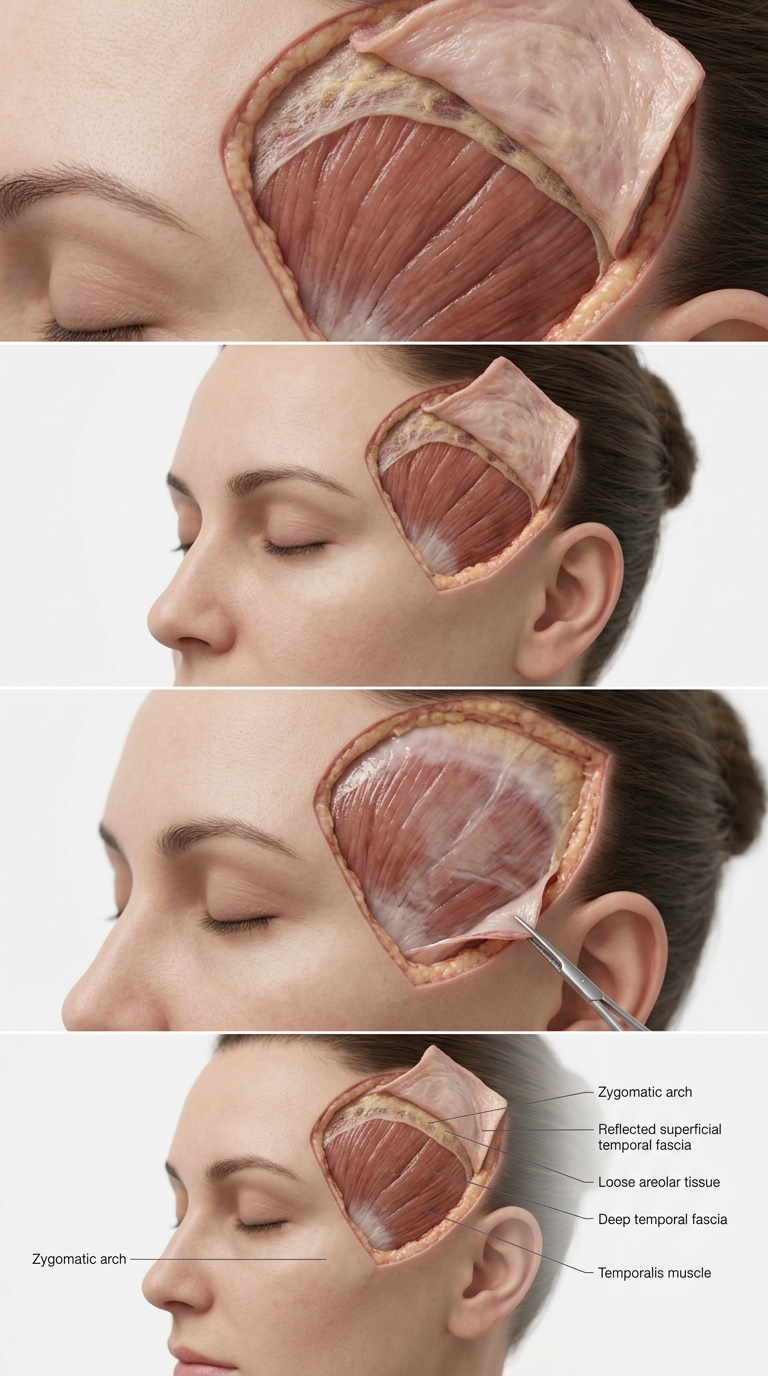
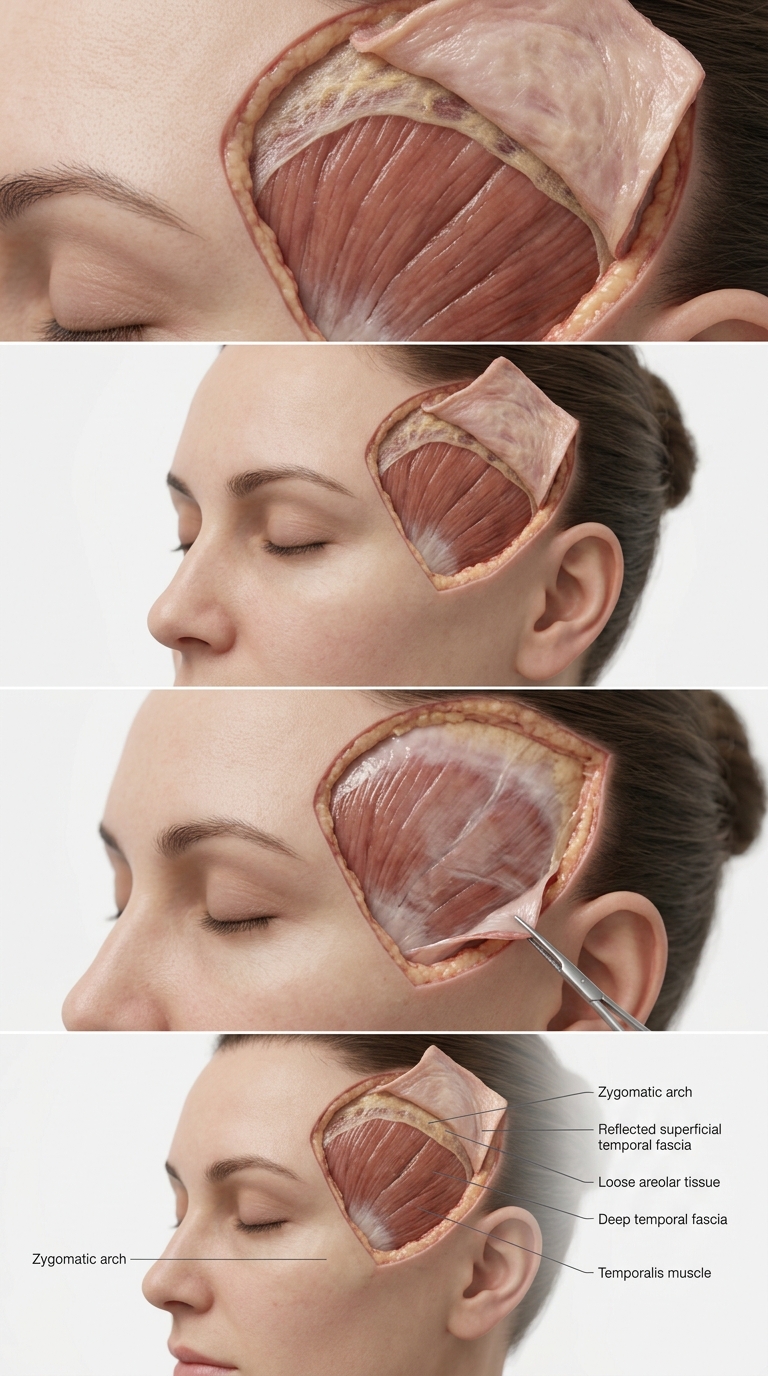
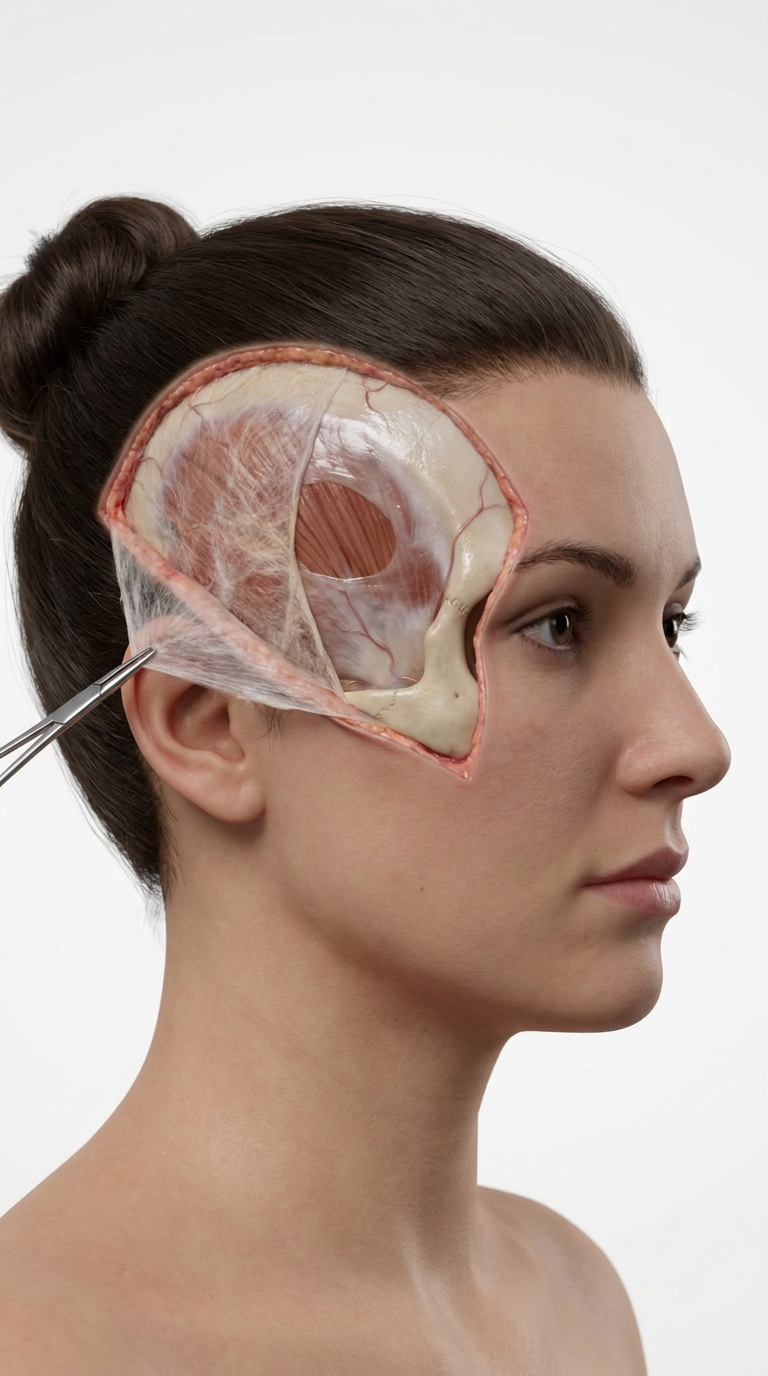
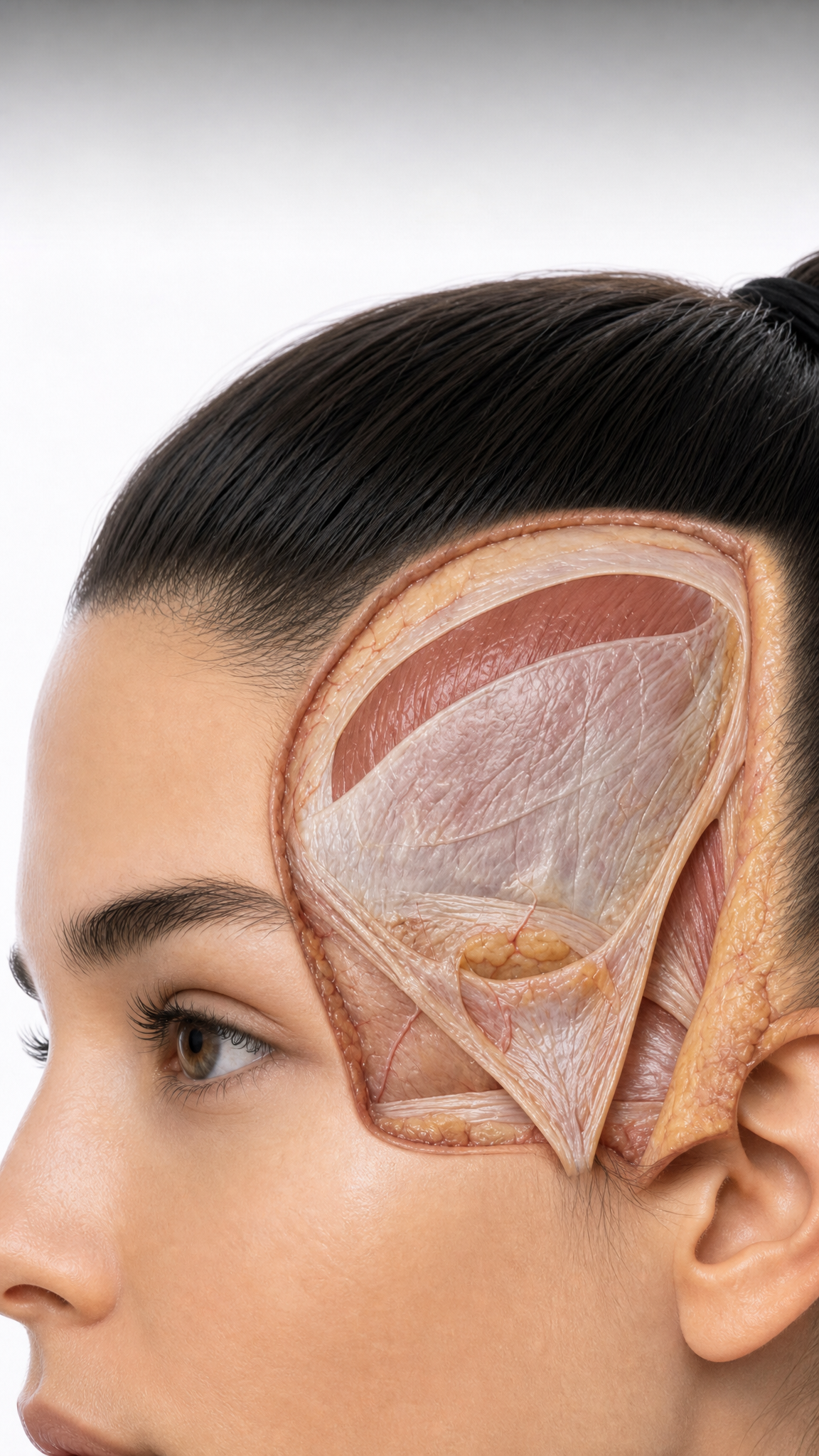
Art style: Cinematic Realistic. Create an original 10–12 second vertical medical anatomy animation in a 9:16 format. Show a fictional adult female patient in a clean three-quarter lateral profile against a seamless high-key white studio background. Use a completely original face, hairstyle, anatomical composition, camera angle, and graphic layout, with no resemblance to any real person or existing medical illustration. The temporal region on one side of the head is presented as a precise surgical cutaway. The hair is neatly retracted away from the operative field. The superficial temporal fascia, also known as the temporoparietal fascia, has been carefully elevated and reflected to reveal the loose areolar tissue plane beneath it. Deeper structures must be anatomically accurate and clearly distinguishable: – skin and subcutaneous tissue at the margins of the dissection; – reflected superficial temporal fascia; – loose areolar tissue plane; – smooth, glistening deep temporal fascia; – reddish-brown temporalis muscle fibres beneath the deep fascia; – the superior border of the zygomatic arch at the inferior part of the field. Maintain the correct anatomical layer sequence: skin and subcutaneous tissue → superficial temporal fascia → loose areolar tissue → deep temporal fascia → temporalis muscle. A small atraumatic surgical forceps gently holds the reflected fascial flap near the lower posterior margin. Tissue edges are clean and educational rather than traumatic. Include subtle, anatomically plausible small vessels, but avoid active bleeding, pooled blood, excessive gore, or distorted anatomy. SHOT SEQUENCE: 0–3 seconds: Begin with a detailed macro close-up of the exposed temporal anatomy. Use a slow lateral camera glide to reveal differences in texture between the reflected superficial fascia, loose areolar tissue, deep temporal fascia, and temporalis muscle. 3–6 seconds: Slowly dolly backward to reveal more of the fictional patient’s lateral facial profile, including the forehead, eyebrow, eye, cheekbone, ear region, and the complete temporal dissection. Keep the head completely still. 6–9 seconds: Smoothly push the camera back toward the surgical field. Use subtle parallax and realistic depth to emphasize the layered arrangement of the temporal tissues. 9–12 seconds: Sequentially fade in thin dark-grey leader lines and small, clean sans-serif anatomical labels. Use an original label arrangement that does not reproduce any existing illustration. Display the following labels: Zygomatic arch Reflected superficial temporal fascia Loose areolar tissue Deep temporal fascia Temporalis muscle VISUAL STYLE: Photorealistic contemporary medical visualization; anatomically rigorous clinical anatomy; premium surgical-atlas quality; natural moist tissue textures without excessive gloss; soft neutral studio illumination; white background with minimal shadows; subtle depth of field; smooth stabilized camera movement; realistic scale and proportions; restrained pink, beige, ivory, and muscle-red colour palette; clean scientific presentation suitable for postgraduate medical education. The illustration must be newly designed from first principles and based only on general anatomical knowledge. Do not imitate any identifiable medical illustrator, studio, social-media account, copyrighted artwork, watermark, logo, font treatment, exact framing, or existing label placement. No narration, no subtitles, no branding, no watermark, no social-media interface. Render in high resolution, 24 or 30 fps, with smooth cinematic motion and no flicker, morphing, anatomical deformation, or inconsistent tissue layers. ━━━━━━━━━━━━━━━━━━━━━━━━━━━━━━━━━━━━━━ FINAL STYLE ENFORCEMENT (this is the authoritative rendering directive — it overrides any style wording elsewhere in the prompt): Render this image entirely in "Cinematic Realistic" style. Match the lighting grammar, material response, colour science, level of realism / stylisation, line weight, and shading model typical of "Cinematic Realistic". Keep the subject, composition, camera angle, lighting direction, and colour palette from the description above — but EVERY surface, skin, fabric, material, and environmental element must be rendered in the "Cinematic Realistic" idiom, not in any other medium.
Free to start · Generate videos and images with AI in seconds
More from this creator




More Gemini 3.1 Flash Image images
См. все →